Replacing the cloudy lens
Cataract surgery removes the cloudy natural lens and replaces it with an artificial intraocular lens. Your ophthalmologist evaluates the health of your eye before recommending surgery.
 OptiláserINTERNATIONALLet’s talk ↗
When cloudy vision makes reading, driving or recognizing faces harder, understanding your cataract treatment options is the first step. Let’s talk about an assessment in Bogotá.
A cataract clouds the natural lens inside your eye. Light no longer passes through as clearly, and vision can become hazy. An eye examination helps establish whether cataract is the cause and whether other conditions may affect your results.
Symptoms alone do not establish a diagnosis.
Cataract surgery removes the cloudy natural lens and replaces it with an artificial intraocular lens. Your ophthalmologist evaluates the health of your eye before recommending surgery.
Discuss the activities that matter to you: reading, computer work and driving. Lens choice depends on your eye health and visual priorities. Glasses may still be needed after surgery.
Optiláser describes phacoemulsification and femtosecond laser-assisted techniques among its options. The appropriate approach is determined individually; laser assistance is not necessary for every patient.
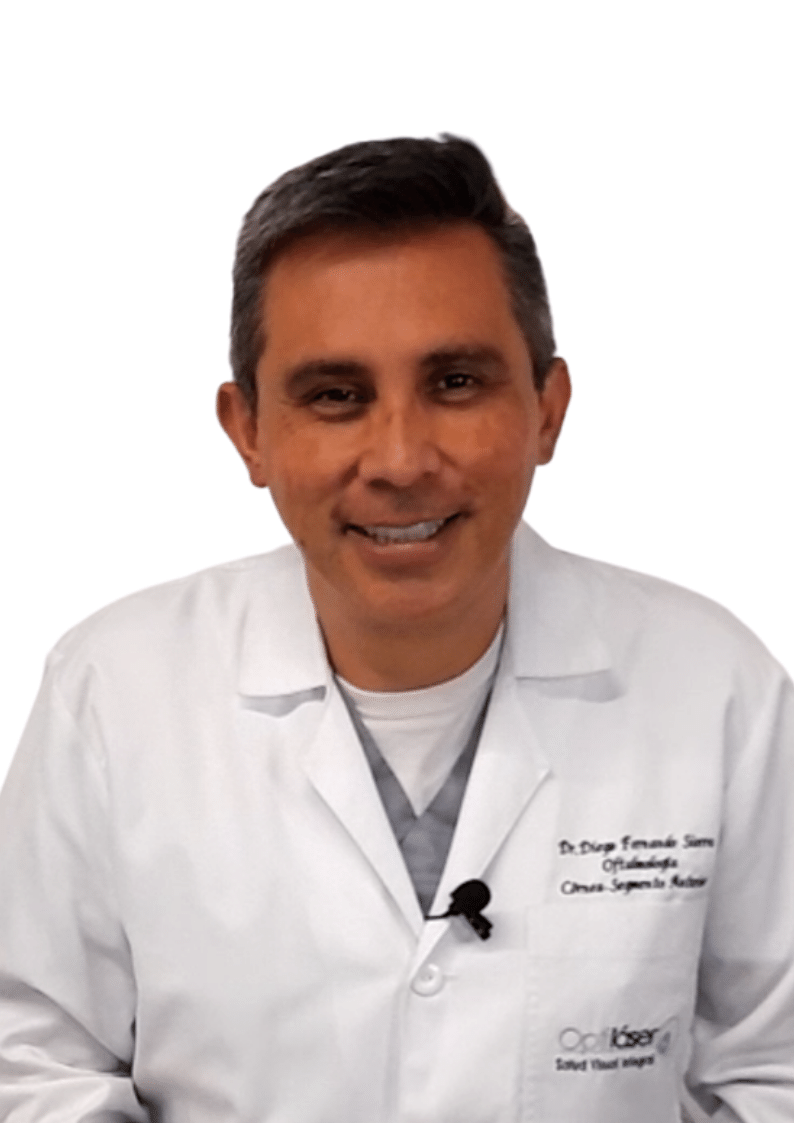
Ophthalmologist with subspecialty training in cornea, refractive surgery and the anterior segment.
Bring your questions to the consultation. Understanding the recommendation is part of making a decision about your care.
Ask about an assessmentDescribe how your vision affects daily activities. Your ophthalmologist will consider these difficulties together with your examination, rather than relying on age alone.
That cannot be guaranteed. Your lens choice, other eye conditions and visual needs all influence the result. Discuss realistic expectations before deciding.
Your surgeon must confirm a cataract-specific schedule, including any treatment of the second eye and follow-up visits. Do not use a refractive-surgery itinerary for cataract surgery.
Recovery varies. Ask about eye drops, activity restrictions and follow-up. Surgery carries risks, including infection, inflammation and changes in vision; your surgeon will explain those relevant to you.
Tell the coordinator which studies you already have. The team will explain which records are useful and how to share them through the appropriate channel.
Tell us how to reach you and which treatment you would like to explore. Our coordinator will guide you through the next steps.
Please do not include medical records or sensitive health information in this initial enquiry.